Easy updos for medium hair work best when they respect the awkward middle ground: enough length to twist and pin, not always enough length to wrap twice and hide the ends. The goal is not a salon sculpture. It is a style that feels secure, looks intentional, and can survive a real day.
Prepare medium hair for grip
Medium hair often slips because it is freshly washed, heavily conditioned, or cut with layers that refuse to meet in the same place. Before trying an updo, give the hair a little grip. Dry shampoo at the roots, a light texture spray through the middle, or even waiting until second-day hair can make more difference than adding twenty bobby pins. Clean silky hair looks pretty down, but it can be stubborn when you ask it to stay up.
Low buns that do not feel severe
The preparation depends on texture. Fine straight hair usually needs root lift and a dry finish so pins have something to catch. Wavy hair may need a small amount of cream on the ends to stop pieces from puffing out. Thick medium hair often needs a stronger elastic first, then pins for shaping. If you start pinning without a base, the style can feel tight in one spot and loose everywhere else.
Twists and tucked styles
Face-framing pieces should be chosen before the updo is finished. Pulling random strands out at the end often creates a messy halo instead of softness. Decide what you want loose around the temples, ears, or cheekbones, then secure the rest. This one step makes simple updo hairstyles look planned rather than rescued in a hurry.
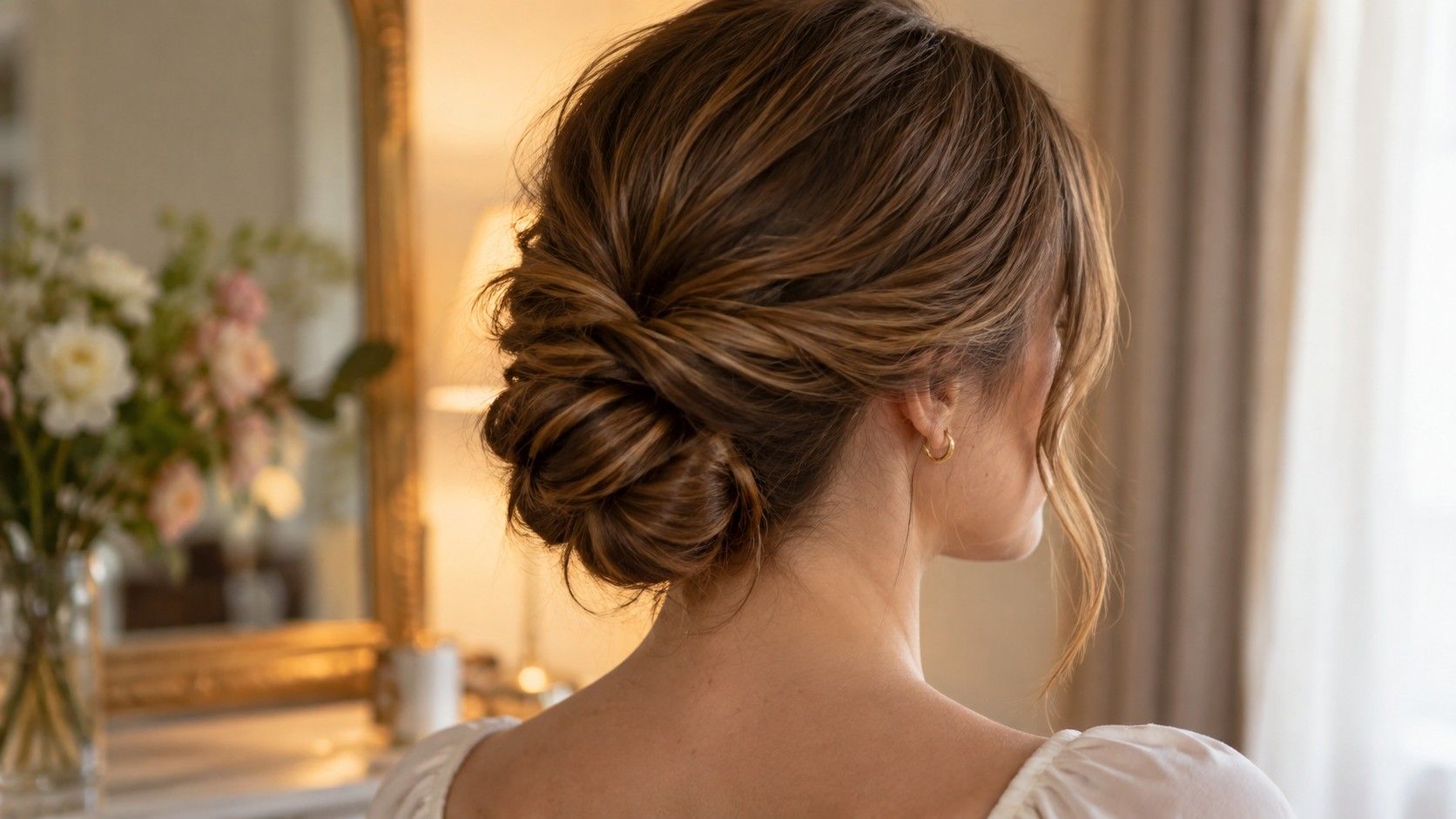
A low bun is the most forgiving of the medium hair updos because it does not fight gravity too much. Start with a low ponytail at the nape, loosen the crown slightly with your fingers, then twist the ponytail around the elastic. If the ends are short, tuck them under the widest part of the bun and pin across them. A bobby pin works best when it catches a little hair from the bun and a little hair from the head, then turns back into the style.
The common mistake is making the ponytail too tight before building the bun. That can flatten the front and make the sides look harsh. Leave a little air at the crown and above the ears. You can always secure more later. A low bun should feel anchored, not strapped down. If you wear glasses or earrings, check the side view before adding hairspray; medium-length pieces can bunch awkwardly behind the ear.
For layered hair, make the bun slightly imperfect on purpose. Smooth only the outer surface, then let a few shorter pieces tuck into the shape. Trying to force every layer into a tiny polished knot usually makes the style look smaller and more stressed. A soft low bun is better when it admits that medium hair has opinions.
Twists are useful when your hair is not long enough for a full chignon. Take the hair from one side, twist it back toward the center, and pin it near the nape. Repeat on the other side, then tuck the remaining ends under both twists. This gives the shape of an updo without requiring a lot of length. It also works well with curtain bangs or shorter front layers because the front can stay relaxed.
A tucked ponytail is even faster. Make a low ponytail, loosen the elastic slightly, open a small space above it, and flip the ponytail through. For medium hair, stop there or roll the tail upward and pin it into the pocket. The finished look is cleaner than a loose ponytail but less formal than a bun. It is especially helpful when the ends are dry and you want them hidden for the day.
| Style | Best base | What keeps it secure |
|---|---|---|
| Low bun | Shoulder-length hair with light layers | Elastic first, crossed pins second |
| Double twist | Medium hair with face framing | Pins placed into the twist, not over it |
| Tucked ponytail | Straight or softly wavy hair | A snug elastic and hidden ends |
| Half-up twist | Layered medium hair | Small pins near the crown |
Updos for slippery fine hair
Fine hair needs friction and smaller sections. One large twist may slide out, while two smaller twists will hold because each section has less weight. Use matte products sparingly; too much product can make fine hair look dusty or stiff. A light mist of texture spray, brushed through with fingers, is usually enough. If the roots look oily, dry shampoo belongs at the scalp, not all over the ends.
Bobby pins should match the job. Standard pins work for most sections, but mini pins can be better around the temples and short layers. Insert pins with the wavy side toward the scalp if that gives more grip, and cross two pins where the style carries weight. When a pin slides immediately, do not keep pushing it into the same place. Move it slightly and catch a different angle of hair.
A half-up updo can be more flattering than forcing all fine medium hair into a small knot. Twist the top section back, pin it at the crown, and leave the lower length loose or softly tucked. You still get lift and control, but the hair looks fuller because some length remains visible. This is a practical choice, not a compromise.
Make layered pieces look deliberate
Medium haircuts often have layers around the face, crown, or shoulders. Those pieces can make an updo prettier, but they can also poke out in places that look accidental. Before pinning, separate the shortest front layers and decide whether they will be left loose, curled slightly without heat by twisting damp, or pinned back with a small hidden pin. Do not wait until the end when the rest of the style is already fixed.
For shoulder layers, tuck ends inward rather than pulling them tight. A small amount of styling cream on fingertips can help the ends join the bun or twist. If you see little spikes at the back, soften them by rolling the section under and pinning from below. Hairspray alone rarely solves short pieces; it freezes the problem in place.
One useful mirror check is the profile. From the front, an updo can look neat while the back has a flat shelf or a loose tail. Turn sideways and look at the crown, nape, and lower bun. A little height at the crown and a tucked nape usually make the whole style read as intentional.
How to make a style last through the day
Hold comes from structure, not from punishing the hair with spray. Build a base with an elastic when the style needs to carry weight. Use pins to lock direction, not to hold the entire updo by themselves. Finish with a flexible spray only after you have moved your head, checked the sides, and made sure nothing pulls. A style that hurts after ten minutes will not become more comfortable after four hours.
Carry two spare pins and a small elastic if you need the updo for a long workday, travel day, or warm evening. Medium hair can loosen at the nape because the shorter underside pieces escape first. A quick re-pin under the bun is easier than rebuilding the whole thing. Avoid touching the front too much; oils from your hands will soften any grip you created.
The easiest updo is the one that works with your haircut. If a low bun always falls apart but a twist holds, choose the twist. If face-framing pieces make the style look better, leave them. Medium hair does not need complicated choreography. It needs a clear anchor, enough texture to grip, and a shape that still looks like you when the day has had its say.