Curtain bangs look relaxed in photos, which is exactly why they cause trouble in real life. The fringe is not just two soft pieces around the face; it has to agree with your haircut length, your parting, the way your roots lift or collapse, and how often you can trim it. I like them most when they are planned as part of the whole cut, not added at the end because the front feels boring.
Why curtain bangs work on many cuts, but not by magic
The useful thing about curtain bangs is the split shape. A blunt full fringe has to sit in one clean line, while curtain bangs can open around the cheekbones, skim the eyes, or start lower near the lips. That gives the stylist room to adjust the fringe to a long layered cut, a collarbone lob, a shag, or even a bob. The danger is assuming that adaptable means effortless. It does not.
Choose the starting length before choosing the mood
Good curtain bangs usually have a short center, longer outer corners, and some graduation into the sides. If that graduation is missing, the bangs can look like two separate flaps. If it is cut too far back from the hairline, the front may steal too much density from the rest of the haircut. I always check where the stylist wants to take the triangle from: a small shallow section keeps the result softer, while a deeper section creates a more obvious fringe.
Pair curtain bangs with long layers, lobs, and bobs differently
Face framing is the point, so the best haircut for curtain bangs depends on where you want the frame to land. Eye-level pieces feel more styled and retro. Cheekbone-length pieces are easier to tuck and grow out. Jaw-length pieces are almost not bangs at all, but they can rescue long hair that hangs like a curtain of its own. The difference is small in centimeters and large in daily behavior.
The first salon decision is not whether the bangs should be French, soft, airy, or dramatic. It is where the shortest pieces should start. If they start at the lash line, they need daily direction with a brush, a dryer, or at least a warm tool. If they start around the cheekbone, they behave more like face-framing layers and forgive a lazy morning. If they start around the mouth, they barely count as bangs, but they still break up one-length hair.
| Starting point | Best for | Watch out for |
|---|---|---|
| Brows to lashes | A visible fringe, high cheekbones, vintage styling | More trims and more morning control |
| Cheekbones | Most curtain bangs hairstyles, medium or long cuts | Can fall into the eyes if the center is too heavy |
| Jawline | Low-commitment face framing and easy grow-out | May disappear into layers on very long hair |
I am cautious with very short centers unless the person already styles their hair most days. A curtain bang that looks perfect after a round-brush blow dry can collapse into a random comma after a walk, a humid commute, or a night of sleep. A slightly longer center can still look intentional when it is not freshly styled. That boring little compromise often makes the difference between a haircut you enjoy and one you keep pinning back.
Long hair gives curtain bangs space to blend. The safest version is a soft center part, cheekbone-length fringe, and long layers that begin below the chin. The outer corners of the bangs should not jump straight into waist-length hair. There needs to be a middle step, even a subtle one, so the front looks connected when the hair moves. On very thick long hair, that connection can be carved with internal weight removal; on fine hair, it usually needs restraint.
Medium hair is where curtain bangs often look most believable. A lob or shoulder-length cut already has movement near the face, so the fringe does not have to do all the work. I like a collarbone cut with curtain bangs that end around the cheekbone and then slide into the front perimeter. It can be worn smooth, bent with a flat iron, or left a little undone. The check is simple: if you pull the hair into a loose ponytail, the front pieces should fall out in a way that looks deliberate, not accidental.
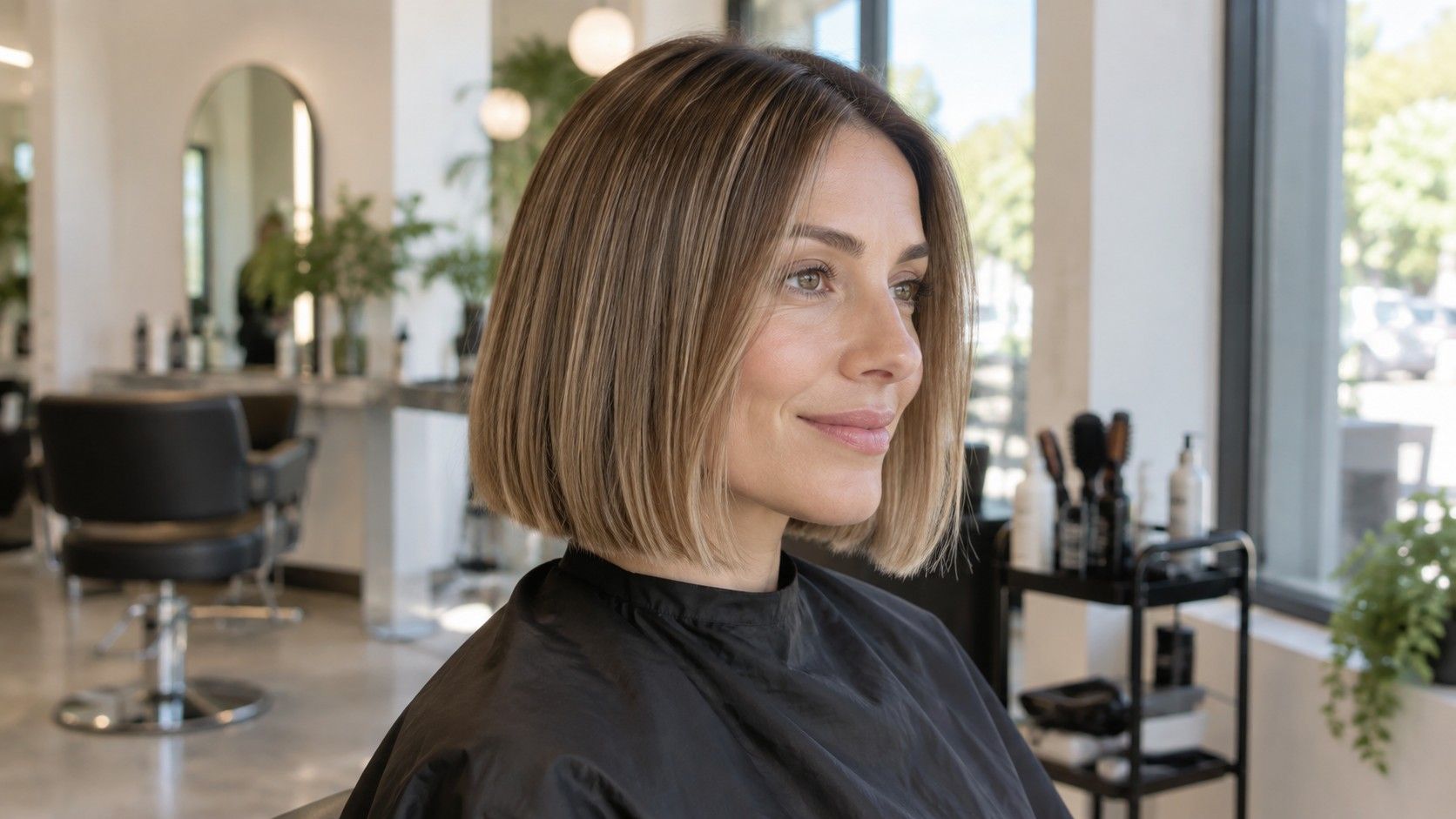
With bobs, curtain bangs need more precision. A jaw-length bob with a long curtain fringe can be chic, but the proportions are unforgiving. If the bang is too long, the whole front becomes heavy. If it is too short, the bob can look split into a fringe and a helmet. A longer bob, especially one that sits below the chin, gives more room. For a short bob, I would ask for a softer bottleneck shape or a very light curtain effect instead of a full sweeping fringe.
Texture, cowlicks, and parting decide the daily reality
A center part is the classic curtain-bang setup, but hair does not care about classic setups. If you have a strong side part, a cowlick at the hairline, or one side that lifts more than the other, the fringe has to be cut with that pattern in mind. Wetting the front and watching it dry naturally tells more truth than a polished reference photo. The stylist should see where the hair wants to split before committing to the shortest point.
Fine hair can wear curtain bangs, but the section should stay light. Taking too much hair from the crown can leave the sides looking thin, especially when the rest of the cut is long. Thick hair often needs the opposite: enough removal inside the fringe so it does not form two heavy wings. Curly or wavy hair needs a dry or curl-aware check, because the shortest piece will spring up. A bang that is cheekbone-length wet may become eye-level once the curl returns.
The daily styling test is honest. If the front dries forward, you may need to blow it side to side first, then split it. If one side flips away beautifully and the other droops, the problem may be the growth pattern, not your skill. I would rather know that before the cut is dramatic. Curtain bangs should be adjusted to your parting and roots, not treated as a universal stencil.
Keeping the fringe from becoming a small unpaid job
Curtain bangs are low commitment only compared with a blunt fringe. They still grow into your eyes, lose their bend, and expose uneven trimming faster than the rest of the haircut. A tidy shape may need a small trim every six to eight weeks. If you prefer salon visits twice a year, ask for longer face-framing pieces instead. They give a similar softness without demanding the same schedule.
Styling does not have to be elaborate. A quick reset with water at the roots, a small round brush, and the dryer aimed down the hair shaft usually does more than piling on product. For some hair, a flat iron bend away from the face is easier. The mistake is coating the fringe with heavy cream or oil, especially near the roots. Curtain bangs need lightness to separate. Once they clump, they stop looking like a soft frame and start looking greasy or tired.
The best haircut with curtain bangs is the one that still works on day two. Before you decide, imagine the fringe with your usual routine: air-dried after a shower, tucked behind sunglasses, pulled into a clip, slightly oily at the roots, or flattened by a hat. If the planned length and shape can survive those ordinary scenes, curtain bangs are a good idea. If the whole look depends on a salon blowout, it is not a haircut; it is a promise you will have to keep every morning.