Hairstyles for diamond faces usually succeed or fail around one area: the cheekbones. A diamond face often has its widest point through the cheeks, with a narrower forehead and a more tapered chin or jawline. The aim is not to hide strong bone structure. It is to decide where the haircut should soften, where it should open, and where extra width would make the proportions feel harder than they need to be.
Notice the widest point first
The most useful first step is to find where your face is widest when the hair is pulled back. If the cheekbones clearly lead, and the forehead and jaw feel narrower, diamond face hairstyles should avoid piling all the visual weight at that same cheekbone line. This does not mean flat hair is better. It means volume needs to be placed with more care.
Face-framing layers should soften, not slice
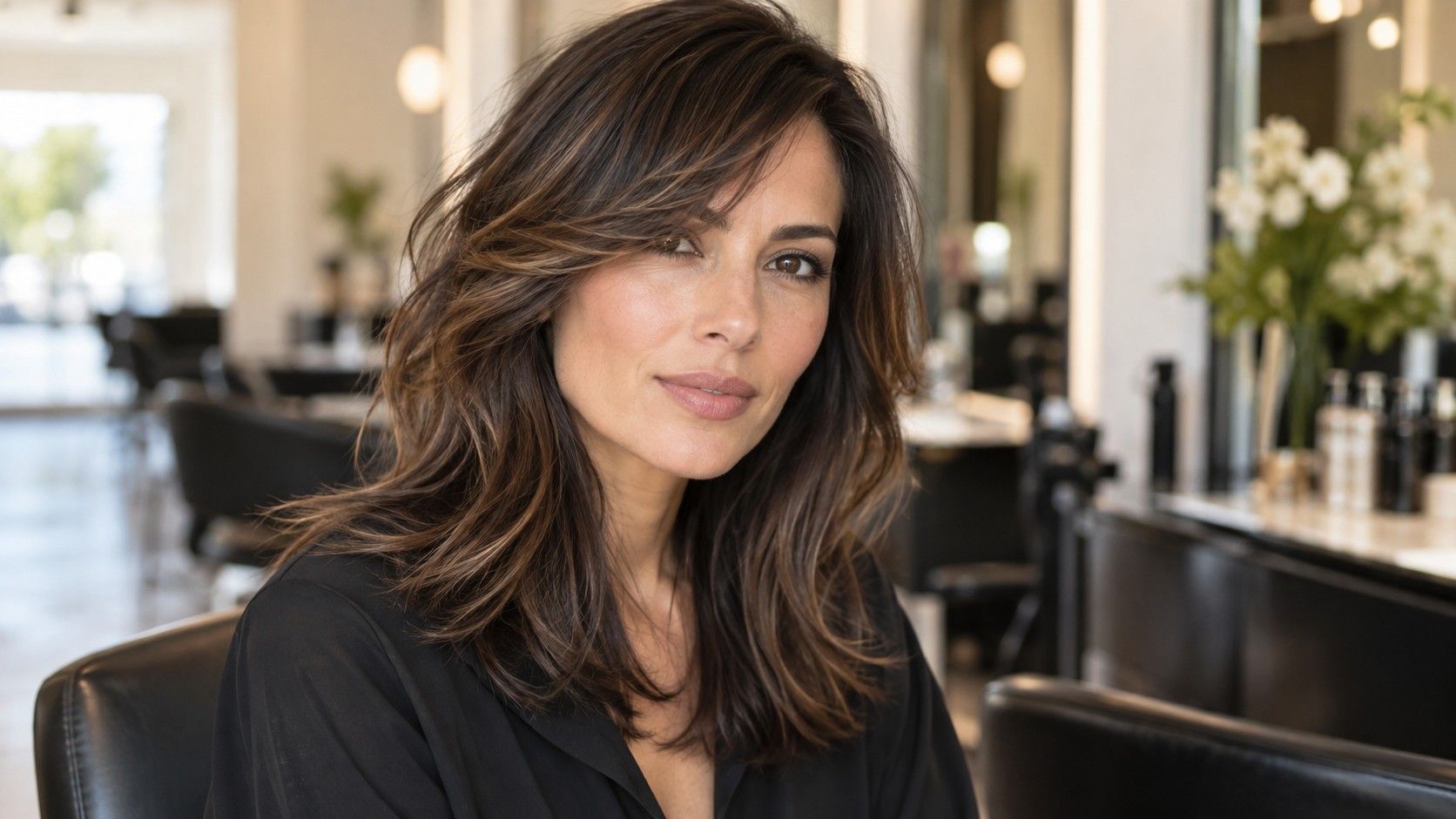
A haircut for diamond face shape often looks best when it adds softness near the forehead, temples, or jaw while keeping the cheekbone area clean. Side-swept bangs, curtain fringe, face-framing layers, and textured medium cuts can all do that. The mistake is choosing a cut that expands straight out from the cheeks and then tightens sharply at the chin. It can make the face look more angular than intended.
Short and medium cuts can work when the outline is controlled
Photos help, but only if they match your hair density and texture. A wispy fringe on fine hair behaves differently from the same fringe on thick, coarse hair. A chin-length bob on straight hair has a different edge than a curly bob. When you compare references, look less at the celebrity and more at where the haircut creates width, where it removes it, and how the front pieces sit against the cheekbones.
Face-framing layers are one of the easiest ways to adjust a diamond face, but their placement matters. Layers that begin right at the cheekbone can sharpen the widest point, especially if the ends flick outward. Layers that start slightly above or below that point can soften the outline. Around the forehead, a gentle curtain shape can make the upper face feel a bit wider without closing it off.
For long hair, I like the front pieces to have a visible route: shorter around the eyes or cheek, then gradually blending toward the collarbone. Random short pieces near the face can look disconnected, and they are frustrating when you tie the hair back. For medium hair, a soft bend near the jaw can balance the narrow lower face. The goal is not to erase cheekbones; it is to make the whole frame feel intentional.
If your hair is curly or wavy, shrinkage changes the layer plan. A piece cut to the cheekbone while wet may spring up toward the temple. On thick straight hair, the same piece may fall heavily and need texturing. Ask the stylist where the shortest face-framing point will sit when your hair is dry in its usual state. That one question prevents a lot of surprised silence in the mirror.
Short hair on a diamond face is not automatically risky. A pixie, bixie, or cropped cut can look strong and elegant when the sides are not too wide at the cheekbones. Softness at the forehead helps, as does texture that moves diagonally rather than straight out. Very tight sides with a tall top can emphasize angles, while a little fringe can bring the shape back into balance.
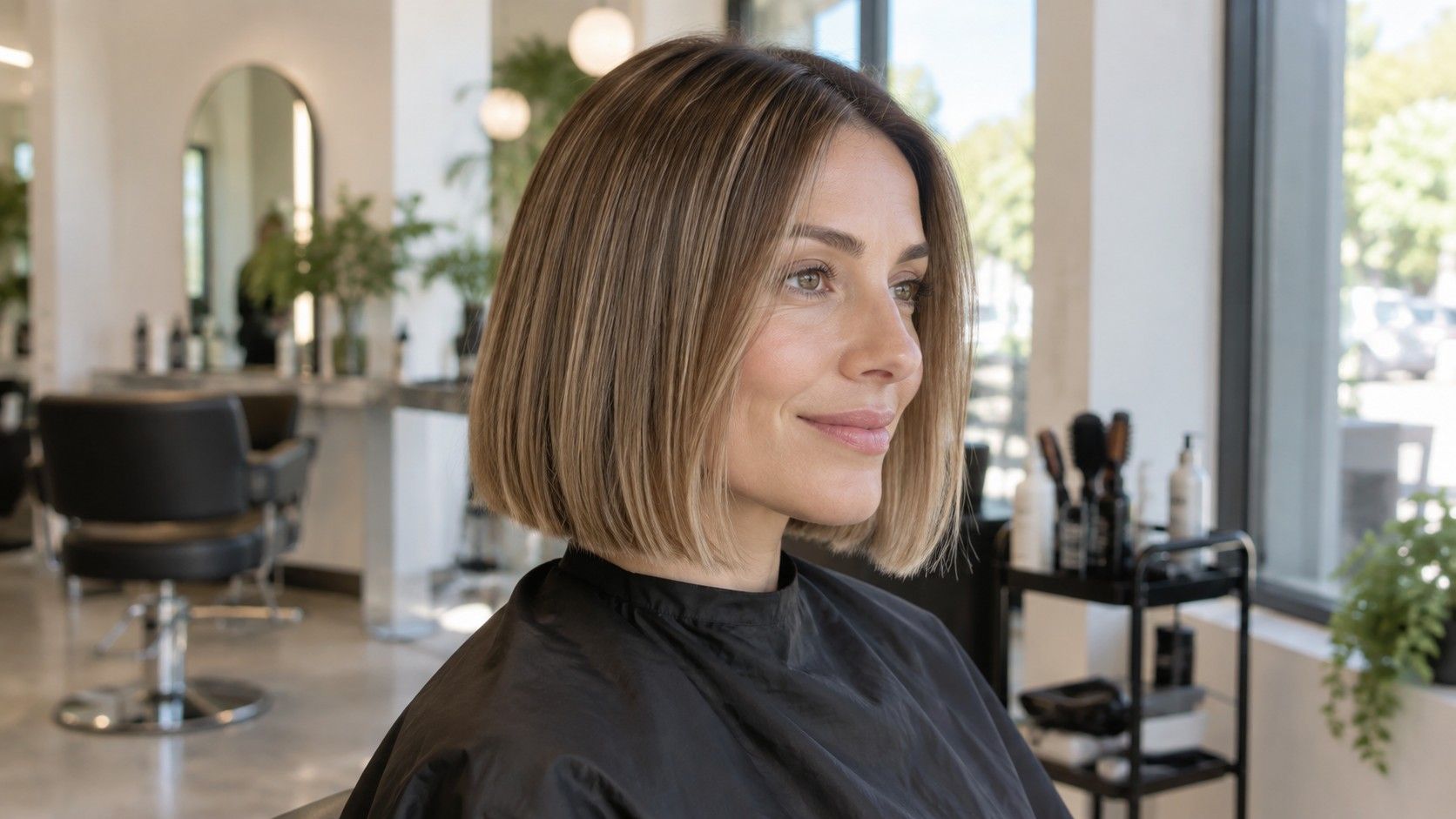
Medium cuts are often the easiest category. A textured lob, soft shag, or chin-length bob can add movement near the jaw and collarbone. A chin-length bob needs careful judgment, though. If the cut ends exactly at a narrow chin and bulges around the cheeks, it may exaggerate the diamond outline. If the line is softened with texture, slight angle, or side movement, it can frame the face beautifully.
| Style option | Helpful detail | Possible problem |
|---|---|---|
| Textured lob | Movement below the cheekbones balances the jawline | Flat front pieces can make the face look narrow at the top |
| Chin-length bob | Soft ends can widen the lower face gently | Too much roundness at cheek level can feel bulky |
| Side-swept pixie | Fringe adds softness across the forehead | Tall crown volume can make angles look sharper |
| Long layers | Face framing can connect cheekbones to the rest of the style | Very long flat panels may leave the center of the face too exposed |
Bangs and parting choices change the upper face
Fringe can be useful for a diamond face because it adds interest where the forehead is usually narrower. Side swept bangs are especially forgiving. They create a diagonal line, soften the temples, and do not place a heavy horizontal block across the face. A light curtain fringe can also work, as long as the opening does not point directly to the widest part of the cheekbones.
Blunt bangs need more caution. They can look stylish, but if they are very straight and dense, they may make the forehead look even narrower by comparison with the cheekbones. A softer edge, slight curve, or airy texture usually blends better. For curly hair, fringe should be cut with shrinkage in mind; a tiny springy fringe may be charming on purpose, but disappointing if it was meant to skim the brows.
Parting is a quiet tool. A deep side part can create width at the top and draw attention away from the center cheekbone line. A middle part can look clean and modern when the front layers fall below the cheekbones rather than flaring out at them. Before changing the cut, spend a few days trying different parts on dry hair. The way your hair naturally separates will tell you which option is likely to survive daily life.
Avoid too much width at the cheekbones
The simplest warning for diamond face hairstyles is this: do not add the biggest volume exactly where the face is already widest unless that is the look you actively want. Heavy layers that kick out at the cheeks, rounded bobs that expand at mid-face, and very full curls cropped at cheek level can all make the proportions more dramatic. Sometimes that drama is the point. If you want softness, move the width up, down, or diagonally.
Texture helps when it breaks a hard line. Loose waves that begin below the cheekbones can balance the jawline. A soft bend near the temples can make the forehead feel less narrow. Piecey ends around the collarbone can keep long hair from looking like a flat frame around a sharp center. The texture should look touchable, not forced into stiff curls that widen one exact band.
Product choice matters more than it sounds. Heavy smoothing cream on fine hair can flatten the top and leave the cheekbones exposed. Too much volume spray at the sides can create a shelf. A light mousse, flexible cream, or texture spray should support the planned shape. The test is whether the haircut looks balanced after you move around, not only while standing perfectly still.
Bring a practical salon plan
A good salon conversation for a diamond face does not need technical geometry. Say where you want softness: forehead, jawline, cheekbones, or overall outline. Mention whether you wear your hair up, whether front pieces annoy you, and how often you will trim bangs. If you rely on a ponytail for work or workouts, ask whether the face-framing pieces will reach back comfortably.
Use photos in pairs. Bring one image for the cut shape and another for the amount of fringe or texture. Also bring one photo that shows what feels too wide, too severe, or too flat. This gives the stylist a boundary, which is often more useful than asking for a perfect copy of one reference.
The best haircut for diamond face shape is usually the one that respects the cheekbones without letting them dominate every angle. Soft layers, side-swept bangs, controlled bobs, and textured medium lengths all give options. The right choice depends on your hair texture, your patience with styling, and where you want the frame to feel open. When those decisions are clear, the face shape becomes a useful clue rather than a rulebook.