Frizz is not one single hair type. It can be raised cuticle, dry ends, brushed-out waves, old heat damage, high porosity, or simply natural texture fighting a haircut that was designed for smoother hair. The best hairstyles for frizzy hair do not promise perfect control. They reduce the daily argument between shape, moisture, weather, and how much time you are willing to spend.
Separate frizz from natural texture before cutting
The most useful salon conversation starts with a blunt question: is the hair frizzy because it is damaged, or because its natural pattern is being treated like a problem? Wavy and curly hair can look frizzy when it is brushed dry, cut with the wrong layers, or dried without enough moisture. Straight hair can frizz when the cuticle is rough, the ends are split, or humidity swells the outer layer. The solution changes depending on which story is true.
How the cut shape affects frizz
I do not trust a haircut plan made only on freshly flat-ironed hair. Smooth styling hides the way the hair behaves on ordinary days. If you usually air-dry, arrive at the salon with your hair close to its normal state or bring clear photos of the bad days. A stylist needs to see the bend, the puff, the pieces that expand near the temples, and the ends that refuse to sit together. That evidence is more useful than a glossy reference image.
Lengths and layers worth discussing
Frizz also lives in different zones. Some people have smooth roots and fuzzy ends. Others get a halo around the crown as soon as the air is damp. Dense hair may expand sideways, while fine hair may look flyaway and dry. A good frizzy hair haircut names the zone it is trying to calm. Otherwise the cut can remove weight from the wrong place and make the problem louder.
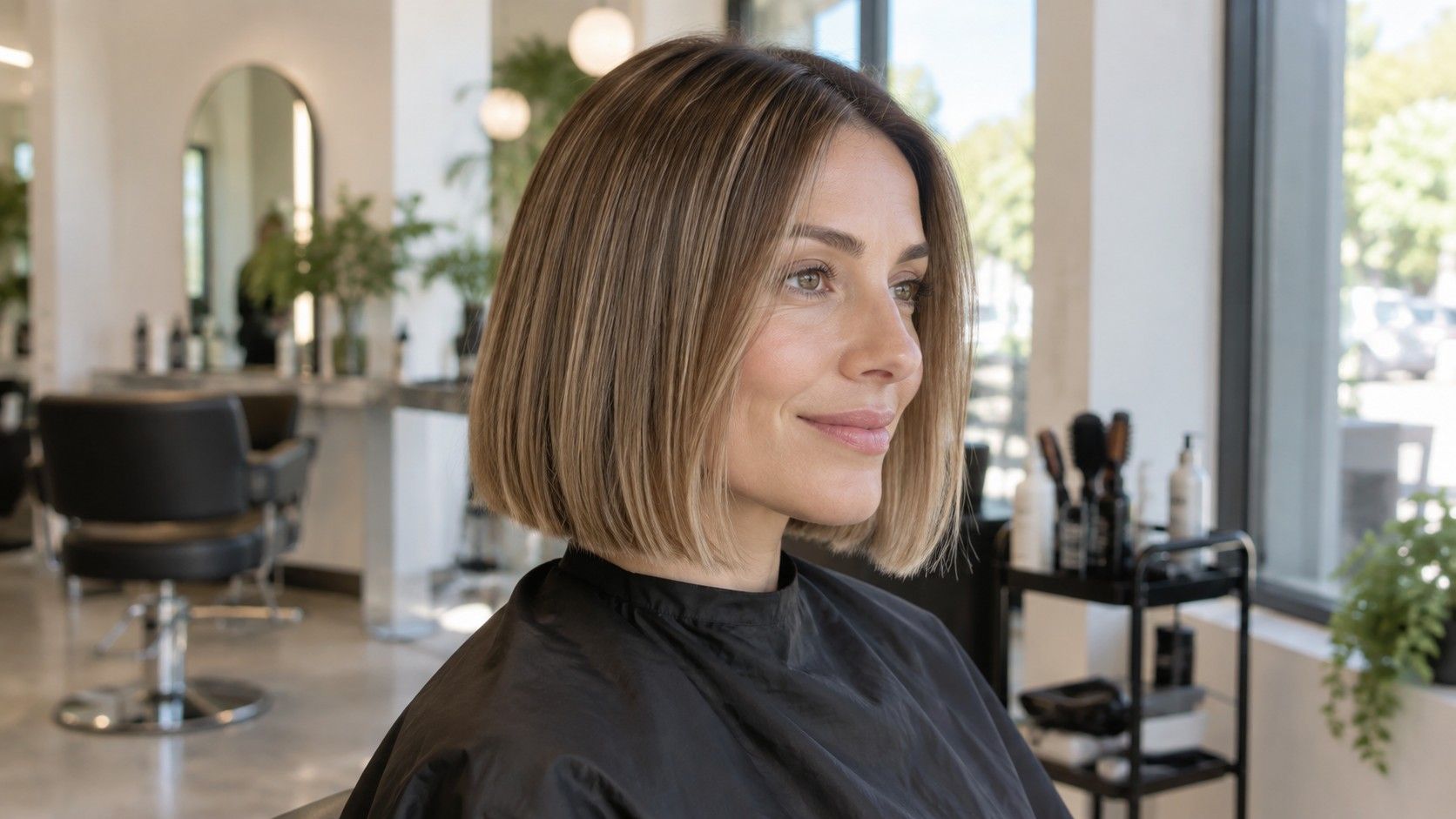
Shape matters because frizz is easier to notice where the haircut has no clear line. A strong perimeter can make frizzy hair look intentional, even when the surface is not perfectly smooth. That does not mean every frizzy head needs a blunt cut. It means the ends should have a visible decision: rounded, softly squared, layered into curls, or cut into a bob with enough weight to hold itself.
Random thinning is the move I would question first. Thinning shears can reduce bulk for a week and create a cloud of short pieces later, especially on wavy, curly, or porous hair. Internal weight removal can be useful when done carefully, but it should support the curl or wave pattern, not shred it. If a stylist reaches for thinning shears before discussing density, porosity, and styling routine, pause and ask what problem they are solving.
Layers can help or hurt. Long layers can give frizzy hair movement and prevent the triangle shape, where the ends spread wider than the roots. Short layers can release curl and make the top livelier. But too many short surface layers can create a halo, especially in humid weather. The best cut for frizzy hair usually balances weight with movement: enough layering to avoid heaviness, enough structure to avoid fuzz.
Shoulder-length hair is a common compromise, but it can be tricky. Hair that rests on the shoulders rubs against fabric, flips unpredictably, and may widen in damp air. A slightly shorter bob can look cleaner if the hair has enough density. A collarbone cut can work if the ends are healthy and the layers are not too wispy. Long hair can be easier to weigh down, but only if the ends are not damaged beyond usefulness.
| Cut choice | Why it can work | Risk to discuss |
|---|---|---|
| Blunt or softly blunt lob | Gives frizzy ends a stronger outline | May feel heavy on dense waves without internal shaping |
| Long layered cut | Reduces triangle shape and keeps tie-back options | Too many surface layers can create a fuzzy crown |
| Curly shag | Uses texture instead of fighting it | Needs curl-aware cutting and styling habits |
| Short bob | Removes damaged length and looks deliberate | Can puff outward if the perimeter is cut too round |
For curly or wavy frizzy hair, I prefer discussing layers in dry-behavior terms: where does the hair spring up, where does it collapse, and where does it grow too wide? A curl-aware cut can turn frizz into shape by letting clumps form. For straighter frizzy hair, the focus may be on clean ends, soft face framing, and less razor work. Razors can be beautiful on some textures, but on porous hair they may roughen the edge.
Styling in humid weather without pretending weather is harmless
Humidity changes hair because moisture enters the strand unevenly. That is why a style can leave the bathroom calm and arrive at the office expanded. No haircut can fully cancel weather, but the right routine gives the cut a fair chance. Start with enough conditioning for the ends, not a heavy coating at the roots. A light leave-in conditioner or anti-frizz cream may help, but too much product can make the hair dull and still frizzy.
Drying method matters more than people admit. Rubbing with a towel raises the surface and breaks up natural pattern. Pressing water out with a smoother towel, then letting waves or curls sit in their clumps, keeps the cuticle calmer. A diffuser on low air can help curly hair dry without being blown apart. For straighter hair, drying the roots and smoothing the outer layer with downward airflow often works better than chasing every flyaway with a hot tool.
Heat styling is tempting because it gives immediate order. The trouble is the bill arrives later if the hair is already porous or fragile. Occasional smoothing is fine for many people, but daily high heat can create the very roughness you are trying to hide. If a hairstyle for frizzy hair only looks good after aggressive straightening, the cut and routine are not cooperating. They are negotiating through force.
When a trim helps more than another product
There is a point where product cannot make old ends behave. Split, over-lightened, or repeatedly heated ends catch humidity faster and sit apart from the rest of the hair. A trim to a stronger line can feel less exciting than buying a new serum, but it often changes the whole silhouette. The hair looks calmer because the weakest pieces are gone, not because it has been coated into obedience.
I like checking the last few inches in natural light. If they are transparent, rough to the touch, or much frizzier than the mid-lengths, length may be costing more than it gives. That does not mean cutting everything short. It may mean taking off enough to restore a clean edge, then choosing layers that respect the remaining density. Small, honest trims can beat dramatic makeovers when the main issue is damaged ends.
The most livable haircuts for frizzy hair accept some texture. They create a shape that still looks intentional when humidity appears, when the roots are not freshly styled, and when the ends move during the day. Perfect smoothness is a fragile goal. A cut with good weight, clean ends, sensible layers, and a routine you will actually repeat is less glamorous as a promise and much better as a Tuesday morning plan.