Hairstyles for long faces are not about hiding the face or following rigid beauty rules. The real job is balance. A long or oblong face usually has more vertical space through the forehead, cheeks, and chin, so the haircut needs to decide where to add width, where to break the line, and where to avoid extra height. Small changes around the fringe, cheekbones, and shoulders can do more than a dramatic cut.
What balance means for a long face
A long face is often described as narrow, but that can be misleading. Some people with long faces have strong cheekbones, some have a high forehead, and some have a softly tapered jaw. The common feature is vertical proportion. If the haircut adds height at the crown and hangs in two straight panels, the face can look even longer. If the cut adds movement around the cheekbones or jaw, the eye reads more width.
Where length helps and where it hurts
The first mirror check is where your face feels most open. Pull the hair back and notice whether the forehead, mid-face, or chin creates the strongest vertical impression. Then let the hair down and see where it naturally falls. A haircut for an oblong face should interrupt the long line at a useful point, not simply cover everything with heavy hair.
Bobs and medium cuts need side shape
This is why the best haircut for long face proportions is often medium length with movement, not necessarily short hair. A lob, collarbone cut, soft shag, or layered bob can all work because they create shape beside the face. Very long, very flat hair can still be beautiful, but it asks for styling support: waves, a side part, a face frame, or some kind of fringe to stop the vertical pull.
Length helps when it gives the hair enough weight to move softly instead of puffing out. It hurts when it becomes a pair of curtains running past the cheeks with no break. Straight hair that reaches well below the chest can emphasize a long face if the ends are blunt and the roots are flat. Wavy or layered long hair is usually easier because the bends create width and shadow along the sides.
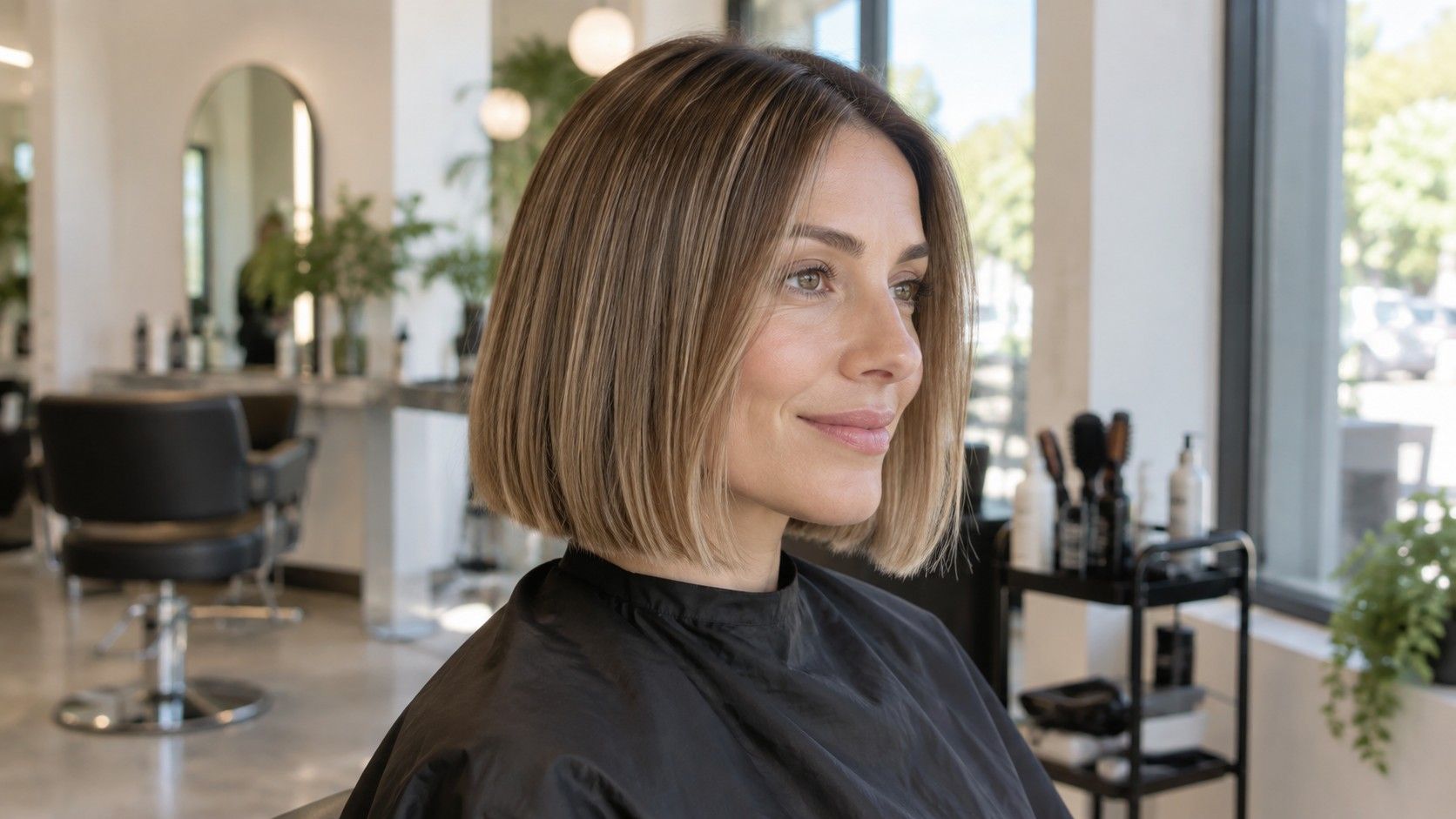
Shoulder and collarbone lengths are popular for a reason. They sit close enough to the face to affect proportion, but long enough to tie back and style without constant fuss. A lob that bends at the cheekbone or jaw can make the face look less stretched. The important detail is not the word lob; it is where the widest part of the style lands.
Short cuts can work too, especially if they avoid stacked crown height. A chin-length bob with texture at the sides can be flattering on a long face, while a tall pixie with tight sides may exaggerate length. That does not mean you cannot wear a pixie. It means the plan should include fringe, side-swept texture, or softness near the temples rather than all the drama sitting on top.
| Cut choice | Why it can work | What to adjust |
|---|---|---|
| Collarbone lob | Adds width near the jaw and keeps styling flexible | Keep ends softly textured, not thin and wispy |
| Layered bob | Builds movement at cheekbone or chin level | Avoid too much height at the crown |
| Long waves | Breaks vertical lines without losing length | Add face framing so the front is not flat |
| Textured pixie | Can show bone structure and soften the forehead | Use fringe or side movement, not tall spikes |
Bangs that change proportions
Bangs are the quickest way to change the balance of a long face because they shorten the visible forehead and create a horizontal line. Full bangs can work beautifully when they are not cut too thick or too rounded. A heavy, helmet-like fringe can make the face feel boxed in, while a softly cut fringe lets the eyes and cheekbones stay visible.
Curtain bangs are a common middle ground. They split the forehead, add movement beside the eyes, and blend into layers without the commitment of a blunt fringe. For a long face, the shortest part usually works around the brow or upper cheekbone, with the sides tapering into the rest of the haircut. If the curtain pieces start too low, they may not change the proportion much. If they start too high, they can become hard to control.
Side-swept bangs are useful when you want softness but do not like hair sitting straight across the forehead. They add diagonal movement, which can be kinder than a sharp horizontal block. The caveat is maintenance. A fringe that needs heat styling every morning will quickly become a project. Before cutting, check whether your front hairline has cowlicks, widow's peak movement, or a natural split that will fight the shape.
Bobs for long faces work best when they create a little width rather than hanging like two ruler-straight edges. A softly waved bob, a French-inspired bob with a light fringe, or a layered chin-length cut can all shift attention toward the cheekbones. The line should feel intentional from the front and the side. A bob that is too flat at the temple and too blunt below the chin may still lengthen the face.
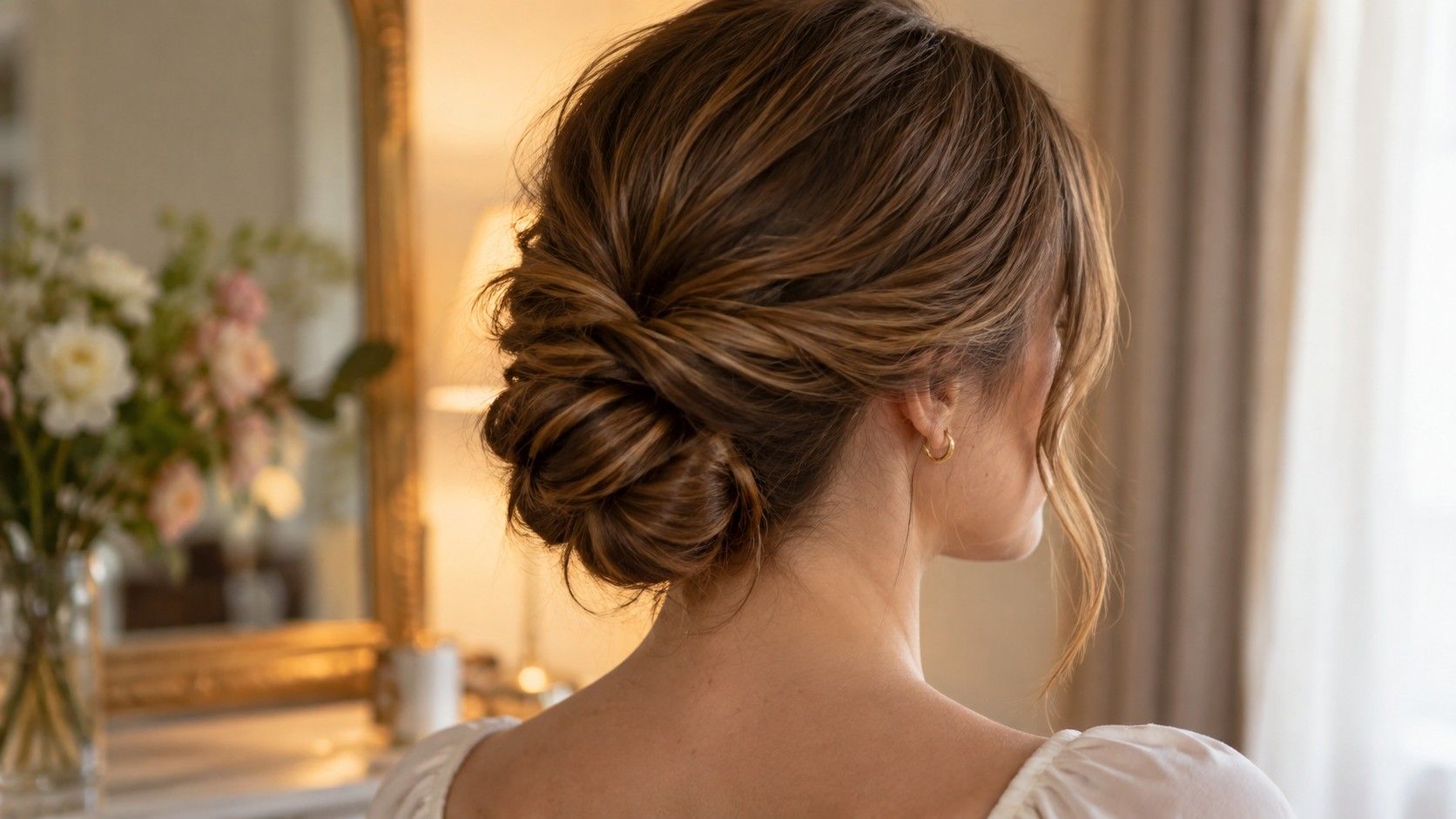
Medium cuts are often easier to live with because they allow side volume without demanding short-hair precision. A collarbone cut with long layers can be worn straight, waved, tucked, or half-up. The face-framing pieces should not all begin below the jaw; at least some movement near the cheekbone helps stop the face from looking longer than it is.
If your hair is fine, keep the ends substantial. Fine hair with too many layers can look airy in the wrong way, leaving the face framed by thin strands. If your hair is thick, the stylist may need to remove weight inside the shape so the sides do not balloon. In both cases, ask where the visual width will sit when the hair is dry and styled normally.
Styling volume at the sides
Styling matters because even the right cut can be pushed in the wrong direction. For long faces, root lift directly on top is not always the goal. Side volume, bends through the mid-lengths, and movement around the cheekbones often do more. A round brush, large curling iron, heatless waves, or a diffuser can all create that side shape, depending on texture.
A side part can help when your hair naturally falls flat through the middle. It creates asymmetry and gives one side a little lift without making the whole crown tall. A middle part can still work if the front layers bend away from the face and the sides have movement. The weaker option is a severe center part with pin-straight hair pressed close to the head, especially when the length continues far below the shoulders.
Products should support movement, not freeze it. Light mousse, texture spray, or a flexible cream can help the sides hold shape. Heavy oils near the roots can pull the style down and make the face look longer. The small test is whether the haircut still has width when you turn your head, not only when every strand is arranged from the front.
Make the rule fit your actual face
Face-shape advice can become too strict if it ignores personal style. Some people like the elegance of a long, clean line and do not want to visually shorten it. Others want softness around the forehead or more fullness near the cheeks. Both choices are reasonable. The useful part of the long-face framework is that it explains what each haircut is likely to emphasize.
When choosing among hairstyles for long faces, focus on three decisions: fringe or no fringe, side volume or sleekness, and length above or below the collarbone. Bring those decisions to a stylist along with photos that match your texture. A cut does not need to erase your face shape. It should give you control over where the eye lands, how much styling the look demands, and whether the balance still feels good on an ordinary day.