The best hairstyles for women over 50 are rarely about obeying an age rule. They are about how your hair behaves now, how much time you want to spend on it, and which shape makes your face look awake without making every morning feel like a salon appointment.
Start with routine rather than age rules
A good haircut after 50 starts in the bathroom mirror, not in a list of what women are supposed to wear. Notice what happens after you wash your hair and let it dry most of the way. If the crown collapses by lunch, you need structure near the top. If the ends expand while the roots stay flat, you need weight removed in the right places, not a random layer party. If grey hair feels wiry around the temples, the finish of the cut matters as much as the length.
Short cuts and soft crops
This is where many haircuts for women over 50 go wrong. The photo looks polished because the model has a round brush, product, and professional lighting. At home, the same cut may demand daily heat styling or constant smoothing. A useful salon conversation is more specific: how often you wash, whether you air-dry, whether glasses sit at the temples, how much natural wave appears in damp weather, and whether you want to show grey hair cleanly or soften the contrast with highlights.
Bobs and medium lengths
Face framing is often more flattering than taking the whole haircut shorter. A cheekbone-length piece can lift the front without removing density from the back. A soft fringe can hide a high hairline, but only if it has enough weight to sit down. Very thin wispy bangs can look accidental by the second day. I would rather see one deliberate front shape than five nervous little layers around the face.
Short hair can look sharp, easy, and expensive when the shape is chosen for density. A pixie with a little length on top works well when the sides grow neatly and the crown has enough body. It becomes harder when the hair is very fine and the top separates into gaps. In that case, a slightly longer crop with textured edges can be kinder because it gives the hair something to lean on.
The practical check is simple: ask how the cut will look at week six, not only on the day it is cut. Short hairstyles need cleaner maintenance because the outline shows quickly around the ears and neckline. If you dislike salon visits, do not choose a cut that collapses when the nape grows half an inch. A soft crop, a longer pixie, or a short layered bob may give the same fresh feeling with more forgiveness.
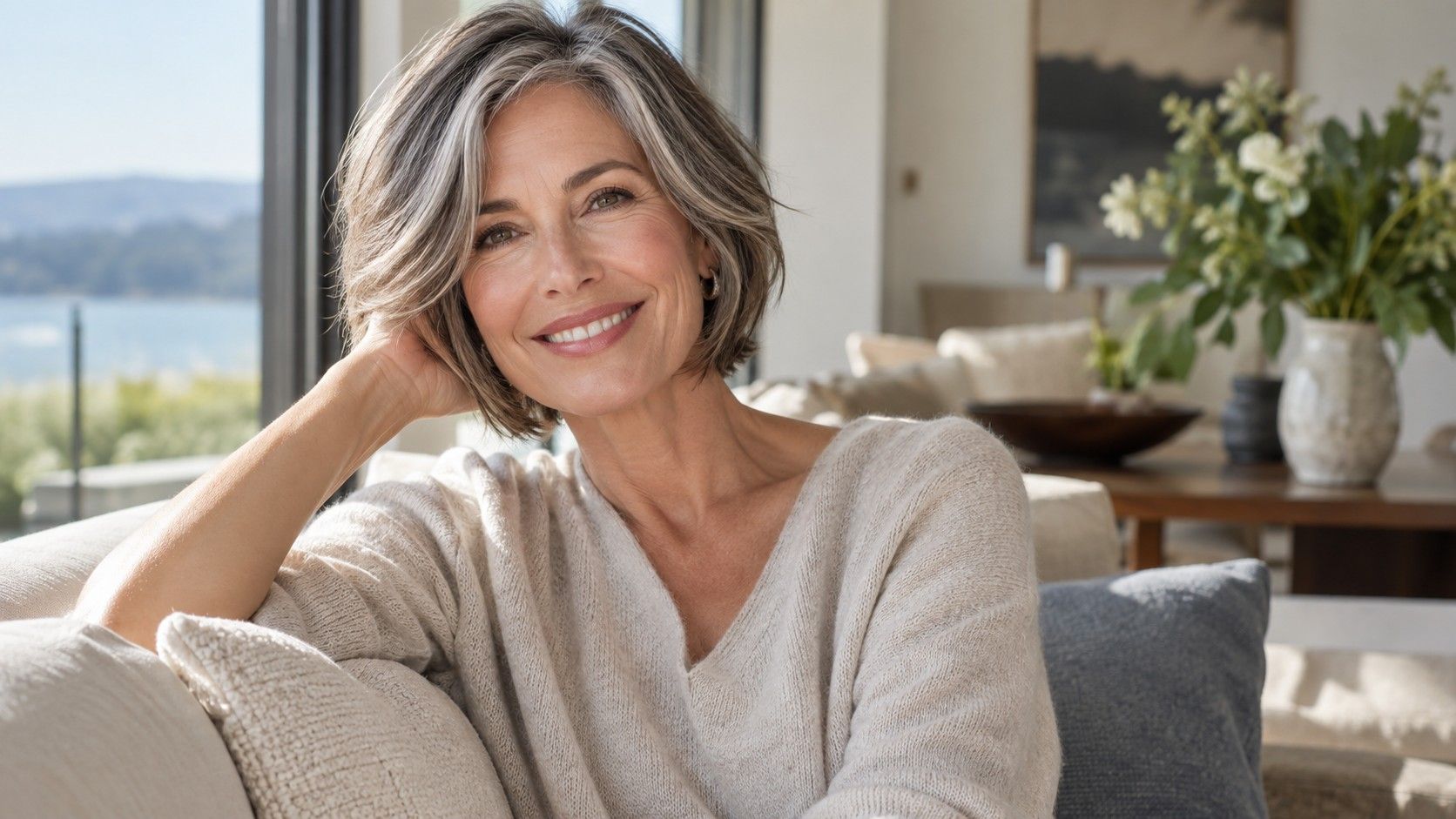
Grey hair can make short styles look deliberate, especially when the perimeter is tidy and the texture is not over-thinned. The mistake is cutting too much into the ends in the name of movement. Mature hair often already has varied texture. Too much razoring can create fuzz rather than shape. Ask for softness where the cut moves, but enough weight where you need polish.
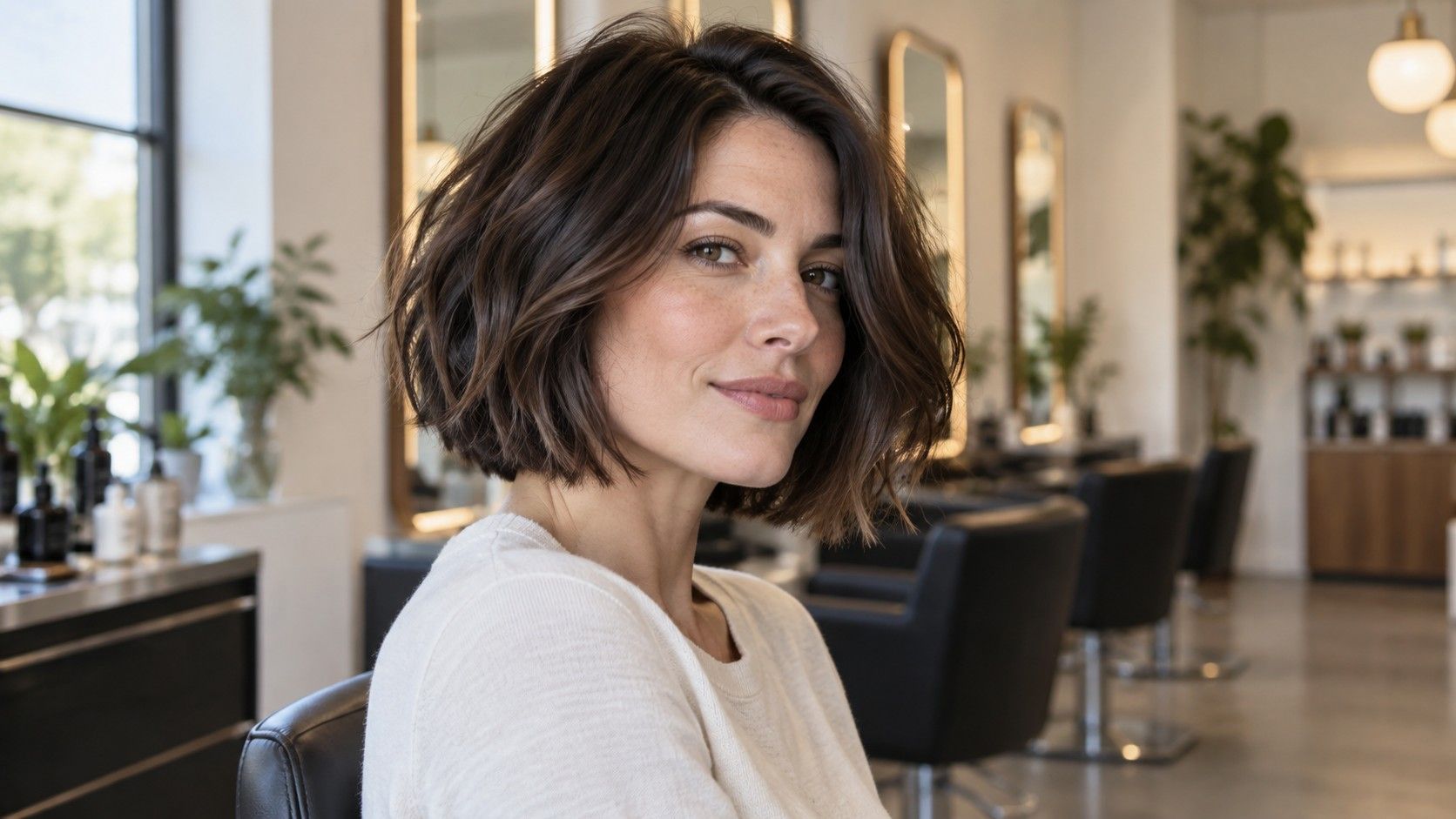
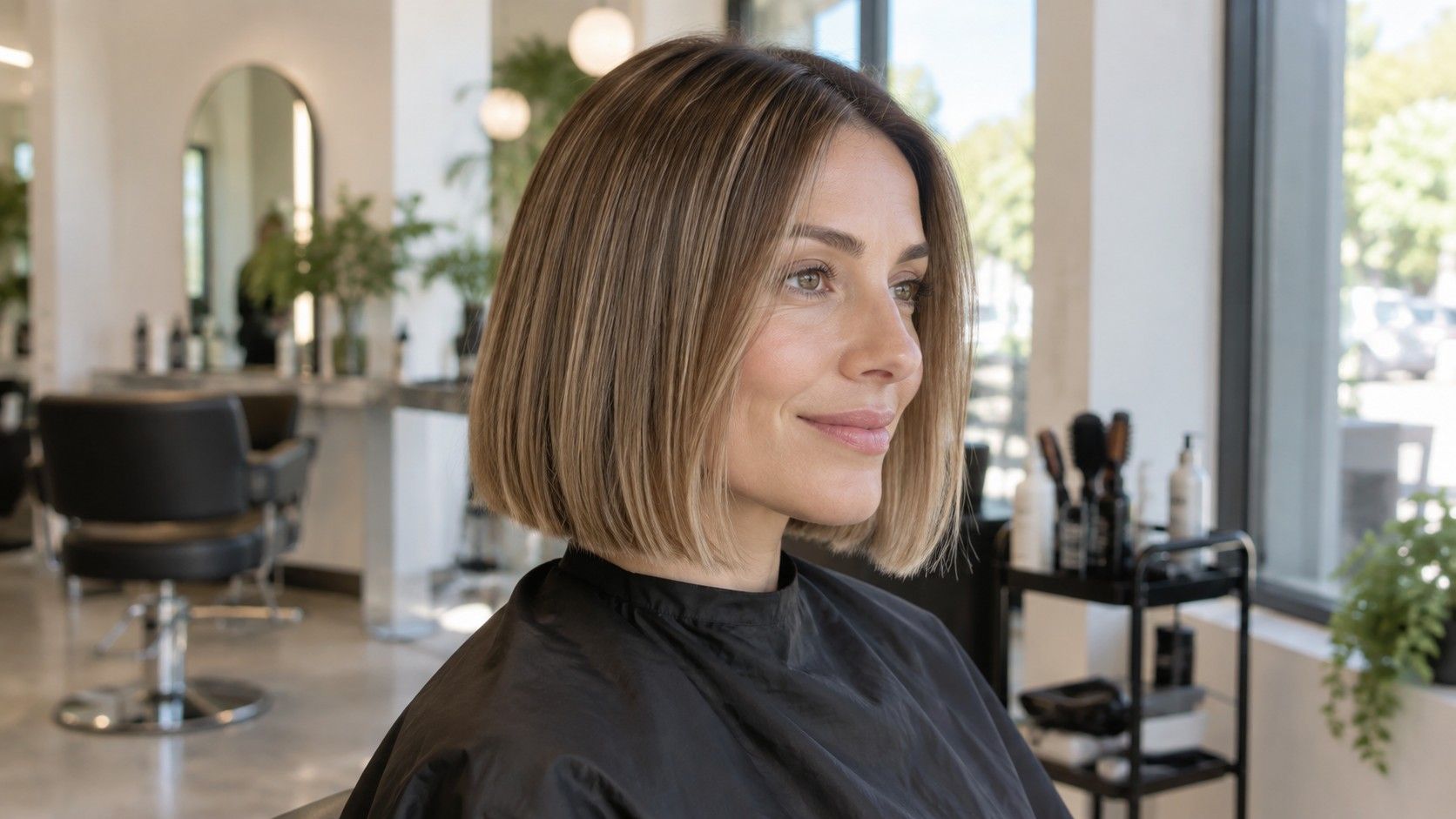
Bobs remain some of the best hairstyles over 50 because they create an outline the eye can understand. A chin-length bob can sharpen the jaw, while a collarbone bob gives more room for waves, glasses, and changing necklines. The version that works is usually not the stiff helmet bob. It is a cut with a clean baseline, light internal movement, and front pieces that relate to the cheekbones or collarbone.
Medium length is also a useful compromise when you want hair that can go up but still looks finished down. The danger is the in-between cut that has no decision in it: too long to hold volume, too short to tie comfortably, and layered just enough to flip out at the shoulders. A better medium cut has one job. It either builds volume through long layers, creates swing through a blunt line, or frames the face with a clear front section.
| Cut | Works best when | Watch for |
|---|---|---|
| Soft pixie | You like frequent trims and natural texture | Too much thinning at the crown |
| Layered bob | You want shape without daily styling | Layers that start too high |
| Collarbone cut | You want movement and easy ponytail options | Flat roots with heavy ends |
| Long layers | Your hair still has density through the ends | Stringy pieces around the face |
Long hair with changing texture
Long hair after 50 does not need an apology. It does need honest editing. If the ends are full and the hair still moves, long layers can look relaxed and elegant. If the last four inches are thin, holding onto them can make the whole style look tired. Cutting to the strongest point of the hair often makes it appear thicker immediately, even if the length loss feels dramatic for a day.
Texture changes are common: hair may become drier, greyer, curlier in one area, or flatter at the root. Long hair shows those changes because there is more surface for frizz and more weight pulling down volume. The answer is not always shorter. Sometimes it is a blunt dusting, a few face-framing layers, a richer conditioner, and less heat on the ends. Sometimes it is a real cut to the collarbone because the hair has been doing unpaid labor for years.
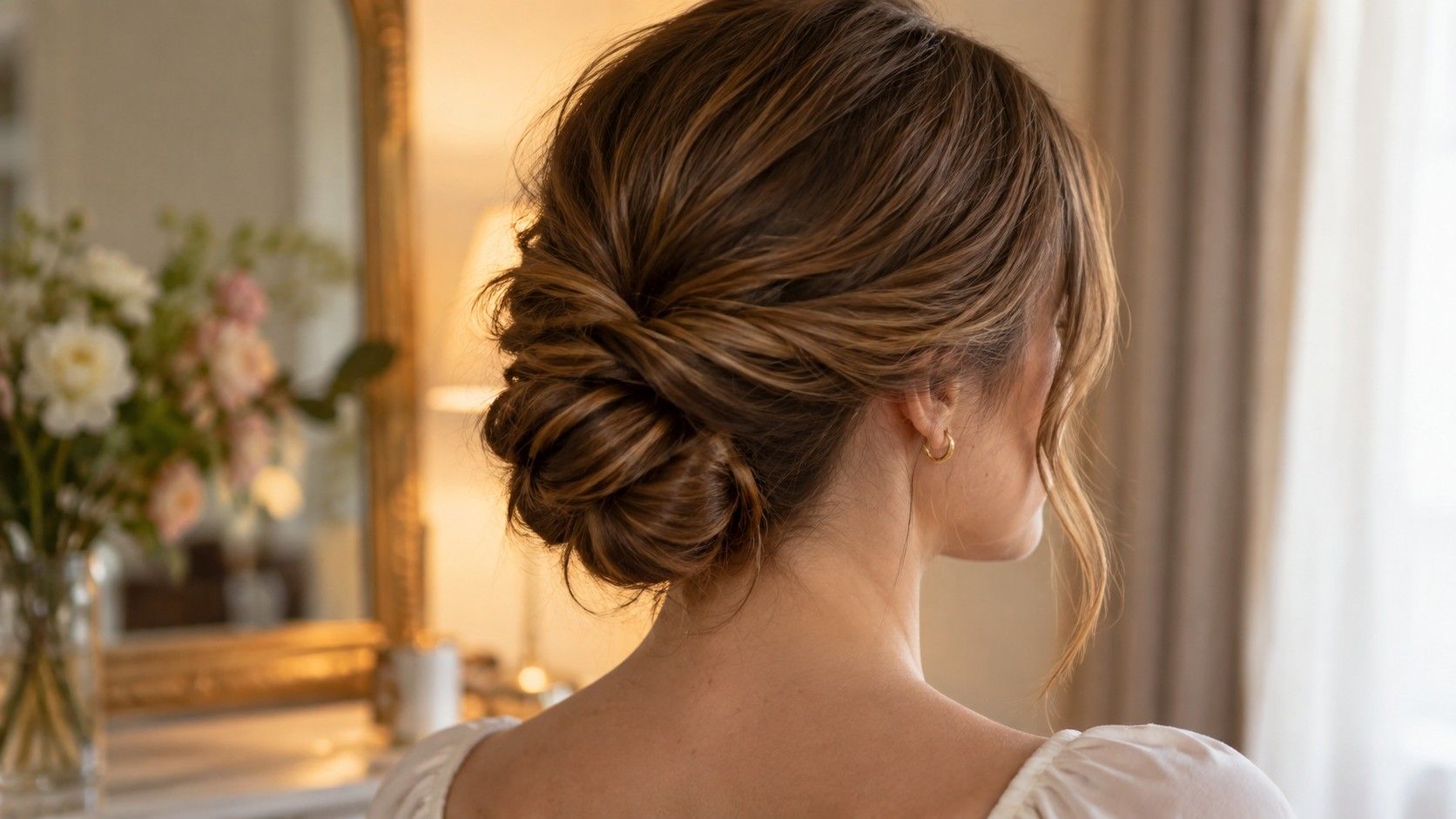
If you wear long hair up most days, build the haircut around that habit. Long curtain pieces can soften a bun, but they must be long enough to tuck behind the ear when you are busy. Layers near the crown can add lift, but they can also escape from clips. A hairstyle is not better because it photographs well loose. It is better when it behaves during the ordinary day you actually have.
Volume without fighting your hair
Volume is not the same as height. Mature hair often looks best with controlled fullness through the sides and crown, plus a clean shape at the ends. If the roots are flat, heavy conditioner near the scalp, long unbroken length, or too much smoothing cream may be part of the problem. If the hair is coarse or grey, volume may be easy but polish may be harder. The products and cut should solve the real issue, not create a new one.
Layers can help, but only when they are placed with a reason. Short layers at the top can lift dense hair; on fine hair they can expose the scalp. Long layers can remove weight from wavy hair; on straight thin hair they can make the perimeter disappear. When a stylist suggests layers, ask where the shortest layer will land and what it is meant to do. That one answer tells you a lot.
For many women, the most flattering volume comes from a slightly shorter length, a side or soft middle part, and a front piece that opens the face. It is not dramatic. It is the sort of adjustment people notice without knowing why you look better rested. That is often the quiet sweet spot.
How to choose a realistic upkeep level
Maintenance is not a moral test. Some people enjoy blow-drying, root spray, gloss appointments, and trims every five weeks. Others want to wash, shake, and leave. Both are valid. The haircut should be chosen for the level of upkeep you will actually give it on a damp Tuesday, not for the level you imagine during a confident salon consultation.
If you color your hair, include that in the haircut decision. Grey blending, highlights, and all-over color change how the cut reads. A precise bob can make silver hair look intentional. Soft layers can help grown-out highlights feel less stripy. A pixie exposes regrowth faster. A longer shape gives more room for color transitions but may need richer conditioning to avoid dull ends.
Bring two kinds of reference photos: one for the shape you like and one for the texture closest to your own. Then ask what would have to change for your hair. The answer may be a shorter fringe, fewer layers, a different parting, or a less polished finish. The right stylist will translate the idea rather than copy it blindly. That is how hairstyles for women over 50 become personal instead of prescribed.