Thick hair gives a men's haircut more presence, but it also makes every mistake easier to see. Too much weight at the sides can turn a clean cut into a helmet by lunch. Too much thinning can leave the ends fuzzy and hard to control. The useful middle ground is not one magic style; it is a shape plan that decides where the hair should look full, where it should sit close, and how much work you are willing to do in the mirror.
Why thick hair needs a shape plan
The first question is not whether thick hair is good or bad. It is where the density sits. Some men have heavy sides that push out above the ears. Others have a strong crown, a stubborn cowlick, or a front hairline that wants to lift even when the rest of the hair lies flat. A thick hair mens haircut works when the barber reads those pressure points before choosing the clipper guard.
Short crops and fades
I would be careful with any cut chosen only from a front-facing photo. Thick hair often looks excellent from the front and awkward from the side if the back corner is left too square. Ask the barber to check the head shape from the profile and from behind. If the hair grows outward at the parietal ridge, the area where the top starts to curve into the sides, leaving extra bulk there usually makes the haircut age fast.
Controlling bulk without thinning too much
A useful shape plan separates control from style. Control is the structure: taper, fade height, scissor-over-comb, crown length, and how much weight is removed. Style is the finish: matte texture, clean side part, loose quiff, or a pushed-back shape. When men hairstyles for thick hair fail, it is often because the finish was chosen before the structure was solved.
Short cuts are the easiest way to make thick hair feel manageable, but the detail matters. A high fade can look sharp for a week and then grow out with a strong shelf if the top is dense and dark. A mid fade or low taper usually gives more forgiveness, especially if you work in an office, wear glasses, or do not want the haircut to announce itself from across the room.
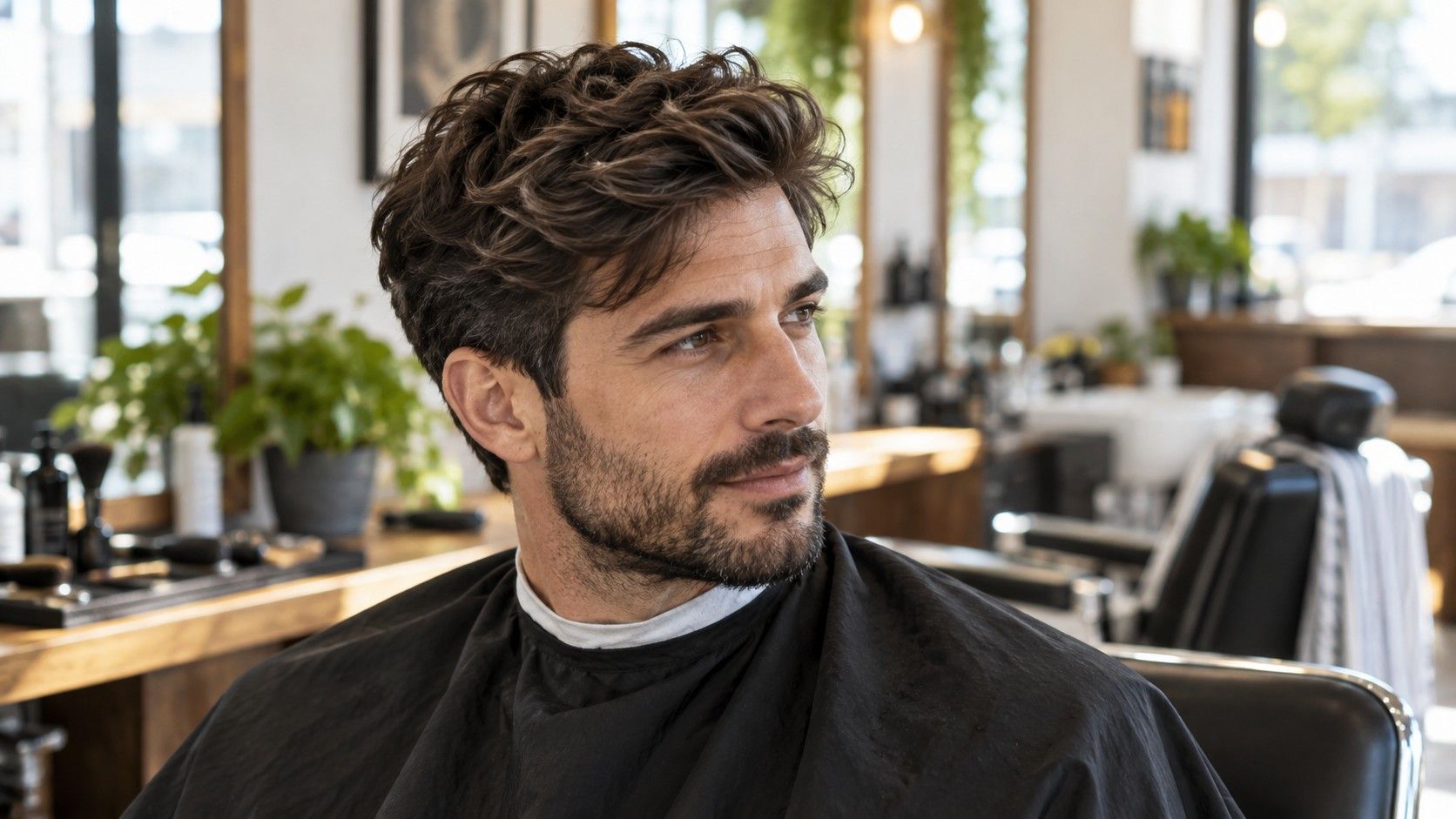
The textured crop is one of the most reliable haircuts for men with thick hair because it uses density as part of the style. The top can be cut with short, broken movement instead of lying like one solid panel. The fringe can sit forward, slightly messy, or be cut blunt if the hairline is strong. The catch is that the crop needs internal texture, not just aggressive thinning at the ends. If the top is point-cut well, it moves. If it is simply shredded, it puffs.
For very thick straight hair, a buzzed fade is not always the low-maintenance answer people expect. The sides are simple, but the top can stand upright in a way that feels harsher than planned. Leaving just enough length on top for the hair to bend can look softer than taking everything down to the same short guard. A barber can test this by lifting the front and crown before cutting too short.
| Cut direction | Best for | Watch out for |
|---|---|---|
| Low taper with textured top | Dense hair that grows wide at the sides | Needs cleanup before the neckline gets bulky |
| Textured crop | Straight or wavy thick hair with a strong front | Too much thinning can make the fringe look dry |
| Mid fade with short quiff | Hair that lifts naturally at the front | A high fade can exaggerate a square head shape |
Medium-length textured styles
Medium length is where thick hair can look expensive or exhausting. A loose quiff, brush back, modern side part, or layered flow all need enough length to bend, but not so much hidden weight that the style collapses. The best medium cuts usually keep the perimeter controlled while letting the top carry movement. That means the sides may still be tapered even when the overall haircut is not short.
If your hair is thick and slightly wavy, do not fight every bend. A medium textured style can use wave to create shape around the temples and crown. The key is to remove weight inside the haircut while leaving the outside line calm. When the outline is chopped too visibly, thick hair starts looking accidental rather than relaxed.
A quiff on thick hair needs a realistic front length. Too short, and the front spikes. Too long, and it needs more product than most people enjoy using. A good barber will leave the front longer than the crown, then blend the top so the volume has somewhere to settle. For a cleaner side part, ask for enough scissor work on the heavy side so the part does not create a ledge.
Weight removal is not the same as thinning everything. Thinning shears can be useful in small amounts, but they can also create short hairs inside the haircut that push the longer hair outward. On coarse thick hair, that can make the shape look bigger a week later. Razor work has the same risk when used without a clear plan.
Better bulk control usually comes from combining techniques. Scissor-over-comb can clean the sides without making them too clipper-flat. Point cutting can soften the top. Channel cutting or careful internal layering can release weight where the hair stacks up. The exact method matters less than the barber knowing which area is causing the problem: sides, crown, fringe, or back weight.
Be honest about how your hair behaves after washing. If it dries into a triangle, you need more attention at the lower sides. If the crown splits, you may need extra length there, not less. If the front falls forward no matter what, a heavy slick-back will be a daily argument. Thick hair rewards cuts that follow its habits rather than cuts that demand obedience.
Product and trim choices
Product should support the haircut, not glue it into submission. For most thick hair, a matte clay, cream, or light paste is easier than a shiny gel. Start with less than you think, warm it in your hands, and apply from the back toward the front so the hairline does not get overloaded. Thick hair can swallow product near the crown, then look greasy at the fringe if everything starts in front.
Blow-drying is optional, but it can save time when the cut depends on direction. A quick pass with warm air at the roots, followed by cooler air to set the shape, gives a quiff or brush back more control than piling on stronger product. If you air-dry, choose styles that are meant to sit closer and move naturally.
Trim frequency depends on the sides more than the top. Short fades may need cleanup every two or three weeks. A textured crop can often go four weeks if the outline stays neat. Medium thick styles may last five or six weeks, but only if the weight was removed correctly at the first cut. When you book, tell the barber what annoyed you by week three: bulky ears, flat top, splitting crown, or product that stopped working. That feedback is more useful than asking for the same haircut again.