A pixie cut is not one haircut. It is a family of short decisions sitting very close to your face, which is why the stakes feel higher than they do with a trim. The best pixie cut is not the bravest one or the tiniest one. It is the one that keeps enough length in the right places, respects your hairline, and gives you a morning routine you can repeat without feeling trapped by your own reference photo.
Decide what you want the pixie to do
Before talking about short pixie hairstyles, decide what problem the haircut should solve. Some people want less drying time. Some want cheekbones and eyes to show. Some want fine hair to stop hanging flat. Others want a clean reset after color damage. Those are different jobs. A cropped pixie that feels light and graphic may be perfect for one person and too exposed for someone who still wants softness around the ears.
Soft crops and textured pixies are the safer first step
I would start by looking at the front view, not the dramatic side shot. The front tells you where the fringe lands, how the sideburns frame the cheeks, and whether the crown creates height or lies flat. A pixie can sharpen a rounder face when the top has a little lift and the sides are neat. The same shortness can lengthen an already long face if the fringe is too vertical and the sides are too tight. This is not about rules carved in stone; it is about where the eye travels first.
Crown length and fringe change the whole mood
Hairline is the quiet boss of the cut. A low hairline at the nape may need tapering so it grows out cleanly. Strong cowlicks can make short fringe spring up. A widow's peak can look beautiful with a side-swept front, but awkward if the cut demands a dead-straight fringe. Ask the stylist to check these details while your hair is dry. Wet hair behaves politely. Dry hair tells the truth.
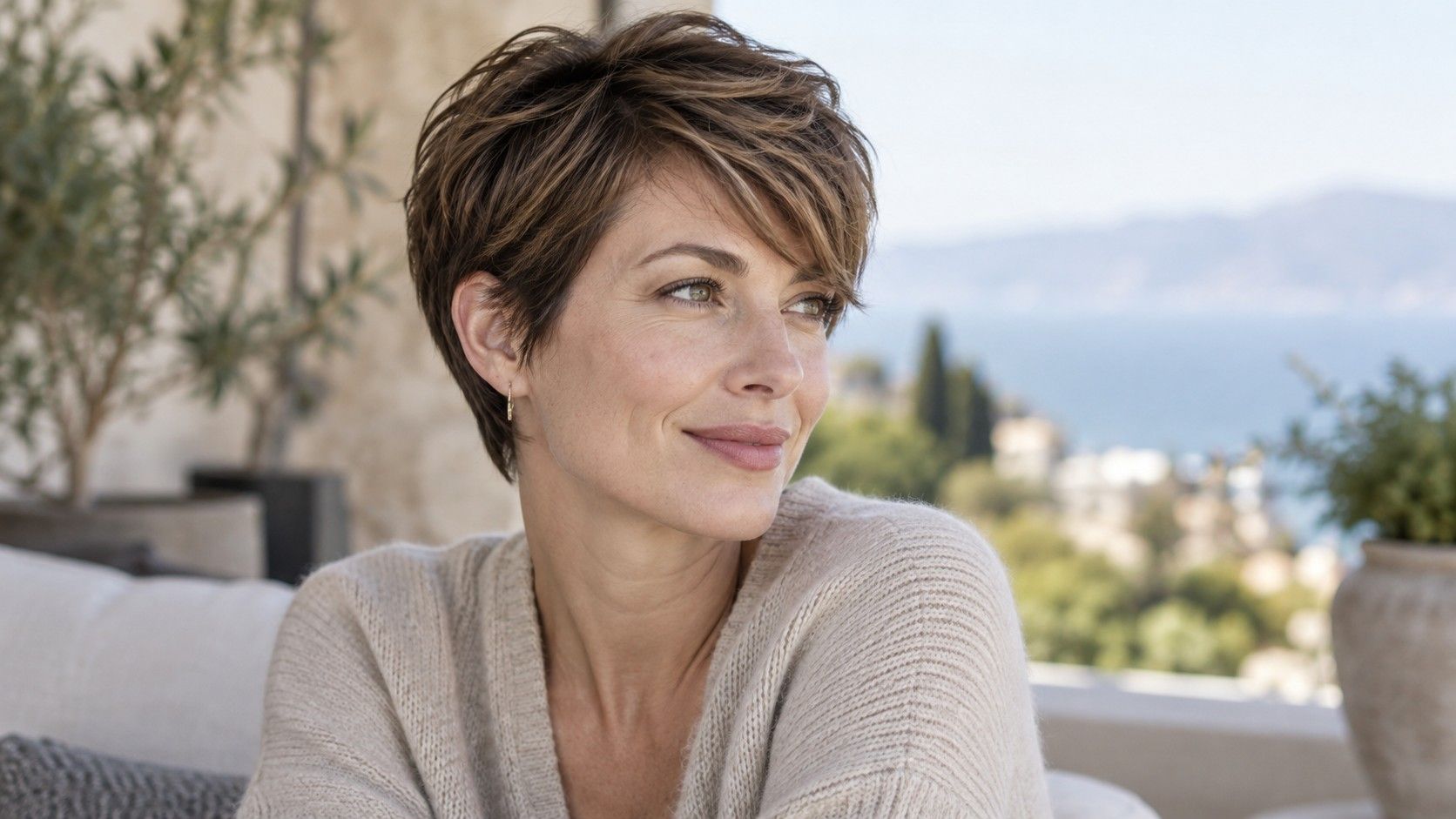
A soft crop keeps a little length over the crown and around the edges. For a first pixie, this is usually kinder than going extremely short everywhere. You can push the front aside, rough it up with paste, or let it sit naturally. It gives you options while your eyes adjust to seeing your neck, ears, and jawline more clearly. That adjustment is real. Even people who love the result sometimes spend the first week catching their reflection in shop windows and doing a small double take.
Texture makes a pixie feel wearable rather than severe. On straight hair, light point cutting can stop the top from becoming a cap. On wavy hair, leaving enough length for the bend to show is usually better than cutting the wave out entirely. On curly hair, a pixie needs careful shape around the temples and crown so the curls look placed, not simply shortened. A good stylist will talk about shrinkage and where the curl will sit once dry.
Very short crops can be excellent if you like clean outlines and do not mind frequent trims. They expose bone structure and make earrings, glasses, and collars more visible. They also expose uneven growth quickly. If your patience for salon visits is limited, keep a fraction more length on top and avoid a razor-tight nape unless you enjoy the tidy look enough to maintain it.
The crown is where many pixie cuts succeed or fail. Too little length there can make fine hair lie flat against the head. Too much can create a rounded bump that looks dated before you have even paid. The sweet spot depends on density and growth direction. Fine hair often needs a little structure and product grip. Thick hair needs controlled removal so the top does not become bulky. Wavy hair needs enough length for movement, otherwise it may stick out in unpredictable corners.
Fringe is the public face of the pixie. A side-swept fringe softens the forehead and gives you something to style. A short micro fringe looks bold but asks for confidence and a cooperative hairline. A longer piece over one side can make the cut feel less exposed, especially if you are coming from a bob or long hair. I am suspicious of any pixie consultation that treats fringe as decoration. It is the part you will see every time you wash your hands and glance up at the mirror.
Sideburns matter more than people expect. A tiny pointed sideburn can sharpen the cheek area. A softer, longer side piece can make glasses sit better and reduce the feeling that the ears are suddenly on stage. If you wear glasses daily, bring them to the appointment. The arm of the frame, the hair above the ear, and the sideburn should not fight each other.
Daily styling is small but not imaginary
A pixie saves drying time, but it does not always save decision time. Short hair shows sleep marks, product overload, and uneven growth quickly. Most pixies need some combination of water, blow-drying with fingers, matte paste, cream, or light wax. The routine may take three minutes, but those three minutes need to happen. If you want wash-and-leave hair, say that plainly. The stylist can leave softer edges and avoid shapes that collapse without product.
Product choice depends on finish. Matte paste gives grip and separation, useful for fine or straight hair that needs texture. Cream is better when hair is dry, coarse, curly, or prone to frizz. Wax can look good on thick hair but may feel heavy if you touch your hair all day. Start with less than you think. A pixie with too much product can look greasy in a way long hair hides better.
Weather has a say too. Humidity can puff up short layers around the crown. Dry winter air can make the front piece static and stubborn. If you exercise often, check whether the fringe bothers you when damp. These details are unglamorous, but they decide whether the haircut feels like freedom or like a small daily negotiation.
Compare the main pixie choices
| Pixie choice | What it gives | What to check first |
|---|---|---|
| Soft crop | Easy first step, movable top, gentle edges | Whether the crown has enough lift without heat |
| Textured pixie | Separation and shape for fine or medium hair | That texture is not cut so short it sticks up |
| Undercut pixie | Clean sides and less bulk on thick hair | How visible regrowth will be after three weeks |
| Long fringe pixie | Softness around the face and styling options | Whether the front falls into your eyes all day |
Trim schedule is part of the commitment
A pixie changes shape faster than longer cuts. The difference between sharp and overgrown can be two weeks around the ears and nape. Many people need trims every four to six weeks. If that sounds annoying or expensive, choose a softer pixie with a longer crown and less severe edges. It will still need maintenance, but it will grow into a crop instead of looking abandoned.
The grow-out plan should be discussed before the first cut, especially if you are nervous. A pixie can grow into a bixie, then a short bob, but the awkward stages are easier if the original shape leaves some strategic length. Keep photos of the direction you want after the pixie, not only the first-day result. A good cut should give you an exit route.
The real test is not whether the haircut looks dramatic on appointment day. It is whether you like touching it into place on a rushed morning, whether it behaves after the first wash, and whether you still feel like yourself when the styling is imperfect. When those things line up, a pixie cut can feel wonderfully direct: less hair to hide behind, but also less hair to argue with.